 Mess Ledger
Meal tracking
Log who ate how many meals, day by day. Costs are divided in exactly that proportion, so someone who was away for a week does not pay for meals they never ate.
Mess Ledger is for people who share a kitchen. Instead of a paper khata that never quite adds up and arithmetic done out loud, every meal, every bazar receipt and every deposit sits in one place — where the whole mess can see it.
First 30 days free · No card needed · Works in Bangla and English
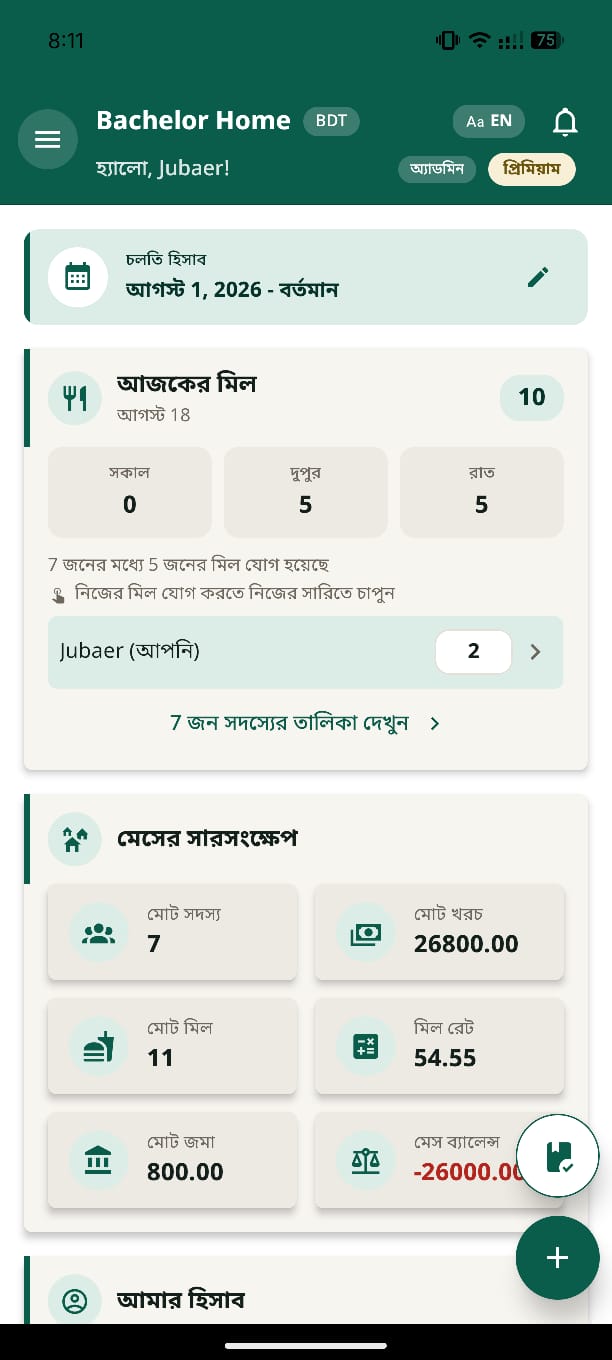
Mess Ledger keeps the daily meals, the bazar spending and the members’ deposits in one place. Every entry is open to every member, so the numbers are clear and the split is fair. The app does the reconciling; you stop having to.
It is built the way messes actually run — someone joins halfway through the month, someone skips a few days, and the kinds of expense change from week to week. Every figure stays auditable afterwards, which was the point.
From logging a meal to settling up at month end — every step in one place, and every member looking at the same numbers.
Log who ate how many meals, day by day. Costs are divided in exactly that proportion, so someone who was away for a week does not pay for meals they never ate.
Record what was bought and what it cost, with detail. Categorise it and you can see at a glance where the mess money is going. For the costs that come back every month, save a template once and reuse it.
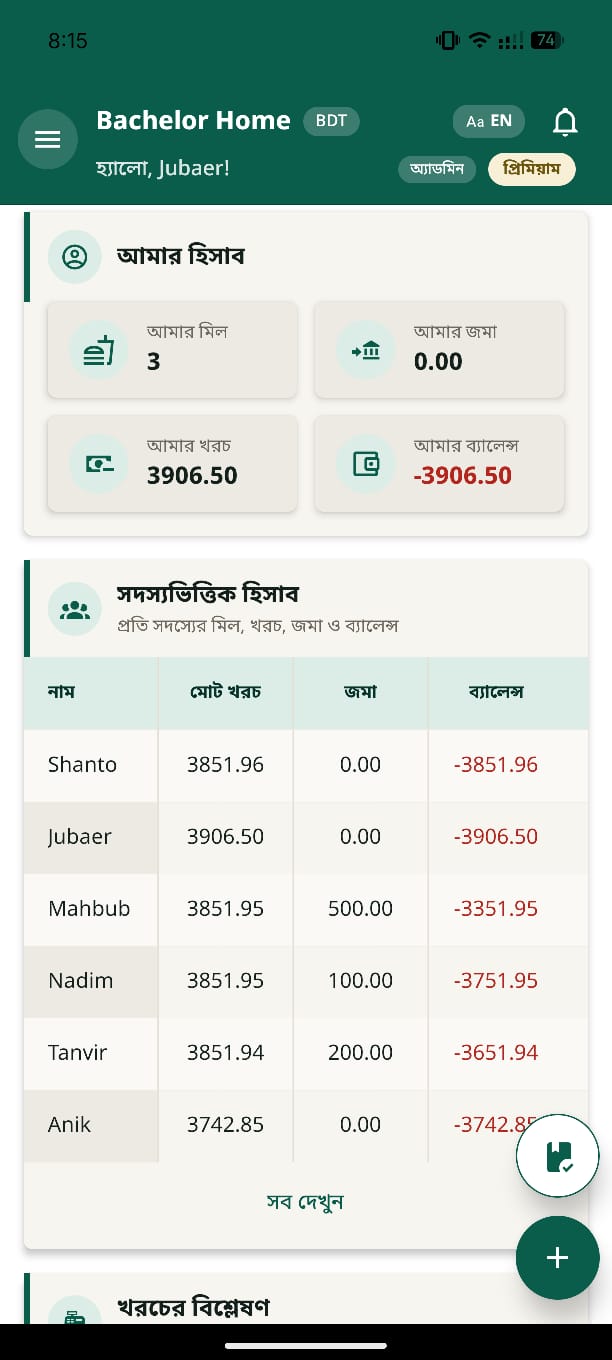
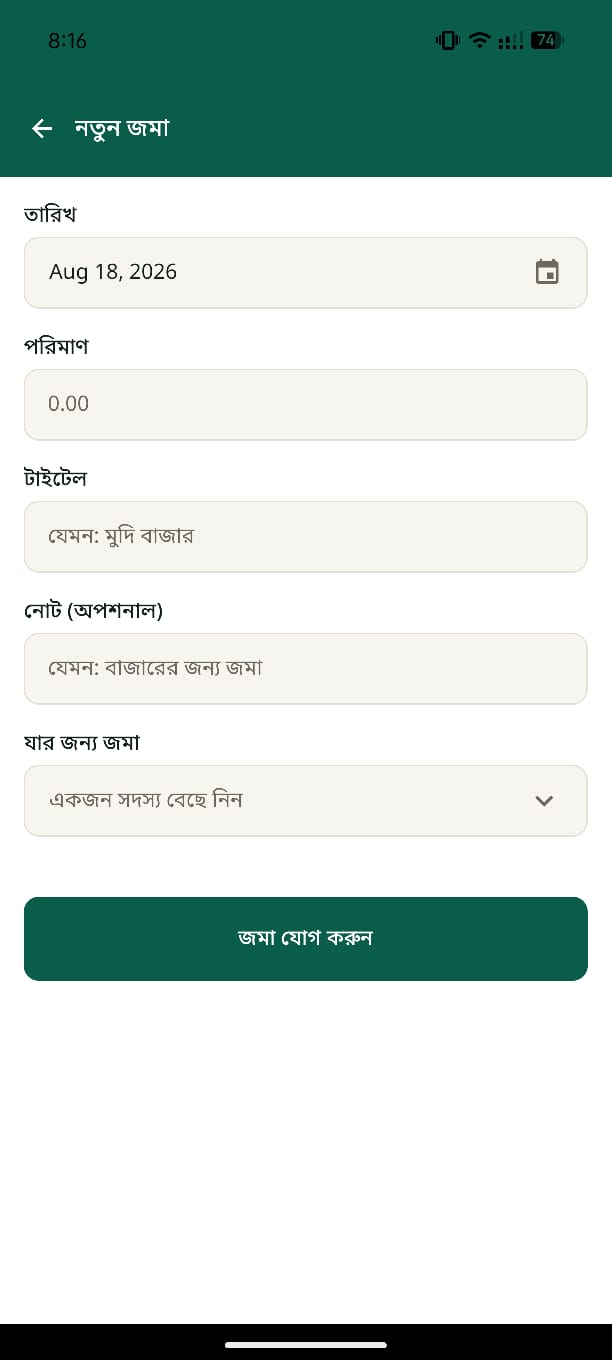
Every taka a member puts into the mess is recorded against their name. Who has paid in how much, and who is owed what, is visible immediately — not at the end of the month.
Run or belong to more than one mess without them getting tangled. Send an invite code to add members, decide who gets admin rights, and each mess keeps its accounts entirely separate.
Close the accounts when the month ends. Meals, expenses, deposits and who paid whom are all kept in history, so any past month can be checked again later.
The whole app works in both Bangla and English. When anyone adds a meal, an expense or a deposit, the other members get a notification.
Create a mess or join one, log the daily meals and costs, and Mess Ledger works out who is owed and who owes when the month closes.
Open ‘Mess’ from the side menu and tap ‘New mess’. Give it a name and the mess exists — it takes under a minute, and you are its admin. If someone has already set one up, paste the invite code they send you and you are in straight away.
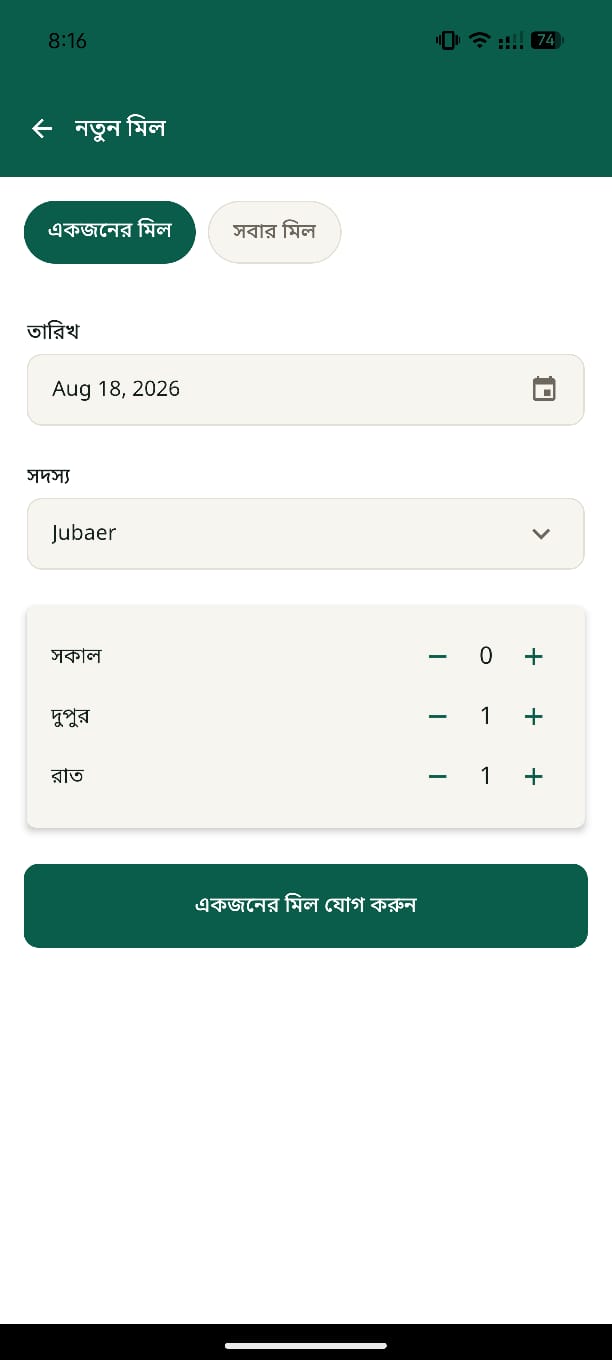
Breakfast, lunch and dinner are counted separately. Enter one member’s meals, or everyone’s in a single step. How the month’s costs get divided rests entirely on this record.
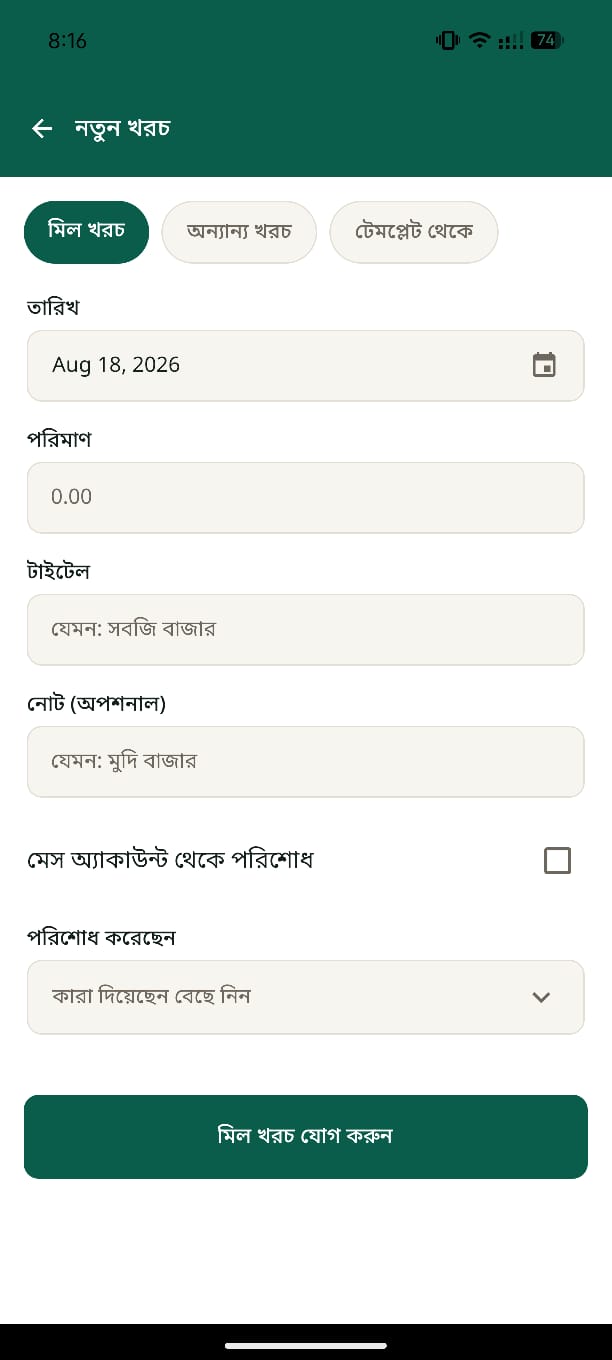
Bazar costs, one-off costs, or a saved template — whichever is quicker. Member deposits go in the same way, so the balance owed to each person is correct on any given day.
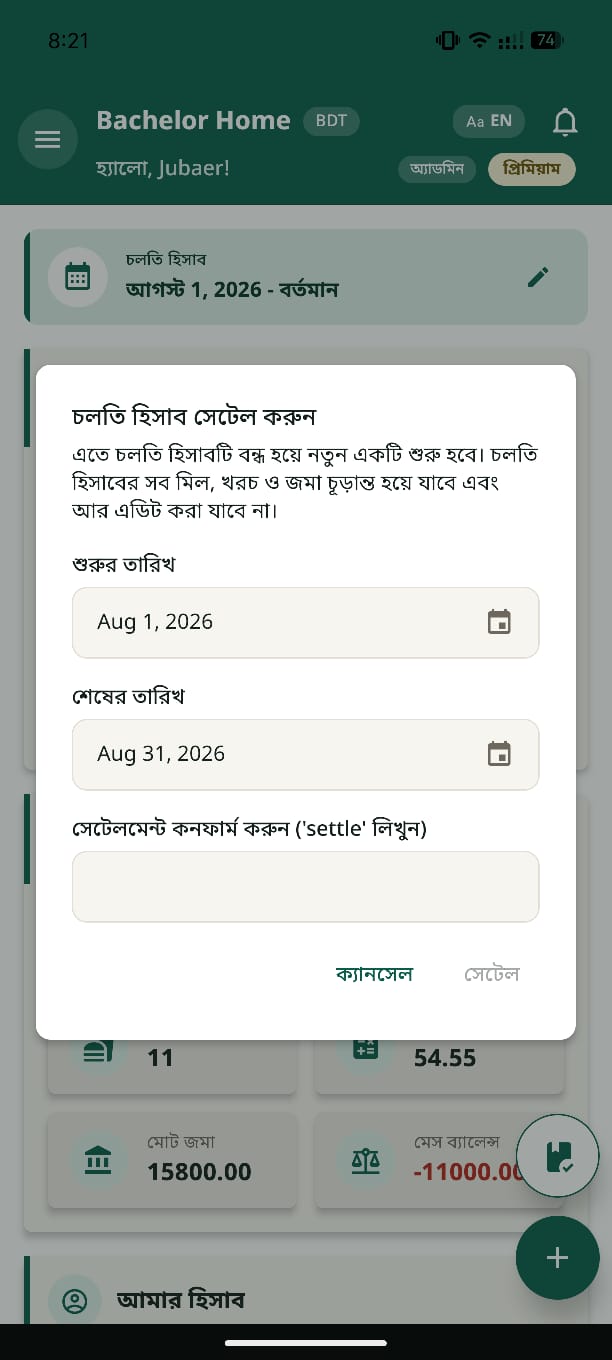
Close the accounts and Mess Ledger weighs each person’s deposits against their share of the costs, then says who is owed and who owes. The payment summary lists it person by person.
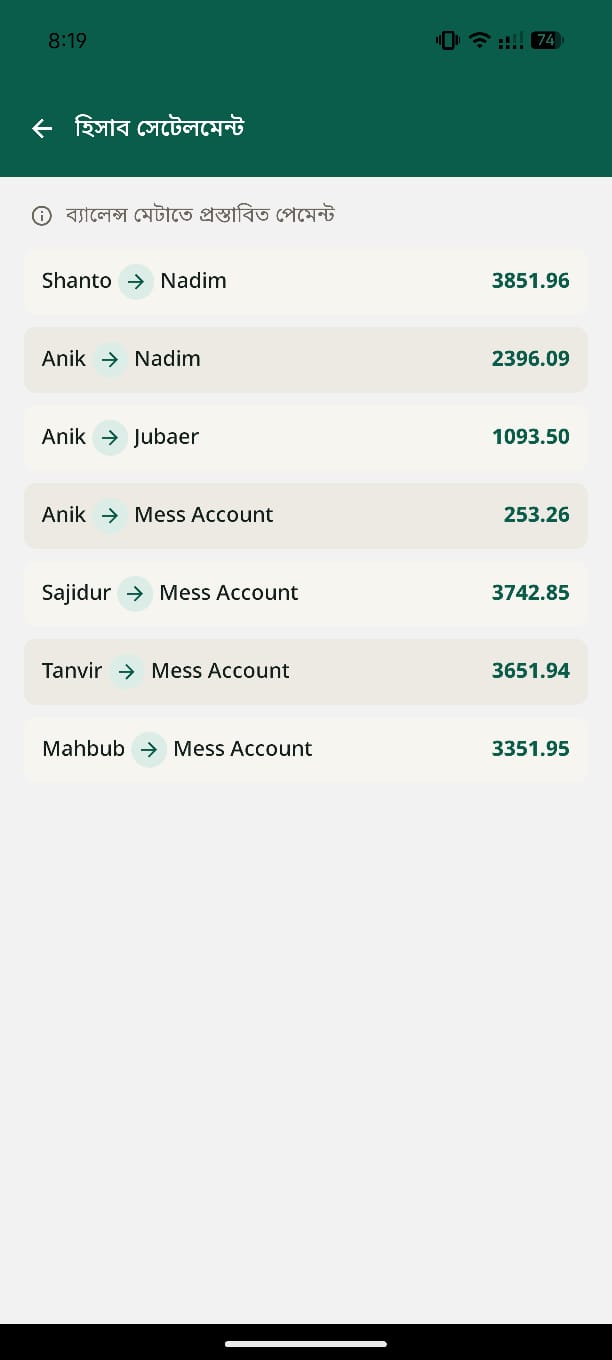
This is how the mess accounts appear in the app. Whoever the member is, everyone sees the same figures.
The first 30 days are free, then ৳50 per member per month — less per month on a longer term. See every term and price.
The free stretch starts the first time you sign in yourself. No card, and nothing to cancel afterwards.
After the free stretch there is one plan. A longer term costs less per month — a full year works out at ৳35 a month.
Pay by bKash or Nagad. Tell the app you have sent it and everything switches on straight away — the admin reconciles it afterwards, and you keep full access while they do. See every term and price.
Open ‘Mess’ from the side menu and tap ‘New mess’. Give it a name and the mess is created — it takes under a minute. You are its admin from that point, so adding members, logging meals and closing the accounts are all yours to do. Send members the invite code and they join themselves.
Open ‘Mess’ from the side menu and tap ‘Join a mess’. Paste the invite code the admin gave you and you are in immediately — there is no approval step to wait for. Once in, you can see the current month’s accounts, your own meals and your own balance.
Yes. You can create several and join several. The ‘Mess’ screen switches between them, and each one keeps its accounts completely separate from the others.
By how many meals each person ate during the accounting period. Eat more meals and you carry a proportionally larger share. Say the mess spends ৳12,000 on bazar in a month and everyone together eats 400 meals: that is ৳30 per meal, so someone who ate 60 meals owes ৳1,800. If you are away for a few days, fewer meals are logged against you and your share drops.
The costs that recur every month, saved once so you do not retype them. Gas, water, the cook’s salary — set them up as templates and adding them later takes a couple of taps.
The stretch of time the meals, expenses and deposits are recorded against — usually a month. Closing a period finalises its accounts and opens a new one.
At month end Mess Ledger weighs each person’s deposits against their share of the costs and works out who is owed and who owes. The payment summary spells out who should pay whom, and how much.
A member with meals, expenses or deposits in the current period cannot be removed directly — that would change accounts other people have already relied on. Settle the period first so everyone’s balance is final, then remove them before any entry lands in the new period.
The first 30 days are completely free — no card, nothing paid up front. After that it is ৳50 per member per month, and longer terms cost less per month: a full year is ৳420, which works out at ৳35 a month. You can pay by bKash or Nagad. See every term and price.
Your data is stored securely, and the only people who can see it are the members of the messes you belong to. We do not sell personal information to anyone. The details are in the privacy policy.
Creating a mess takes under a minute, and the first 30 days cost nothing. No card needed.